



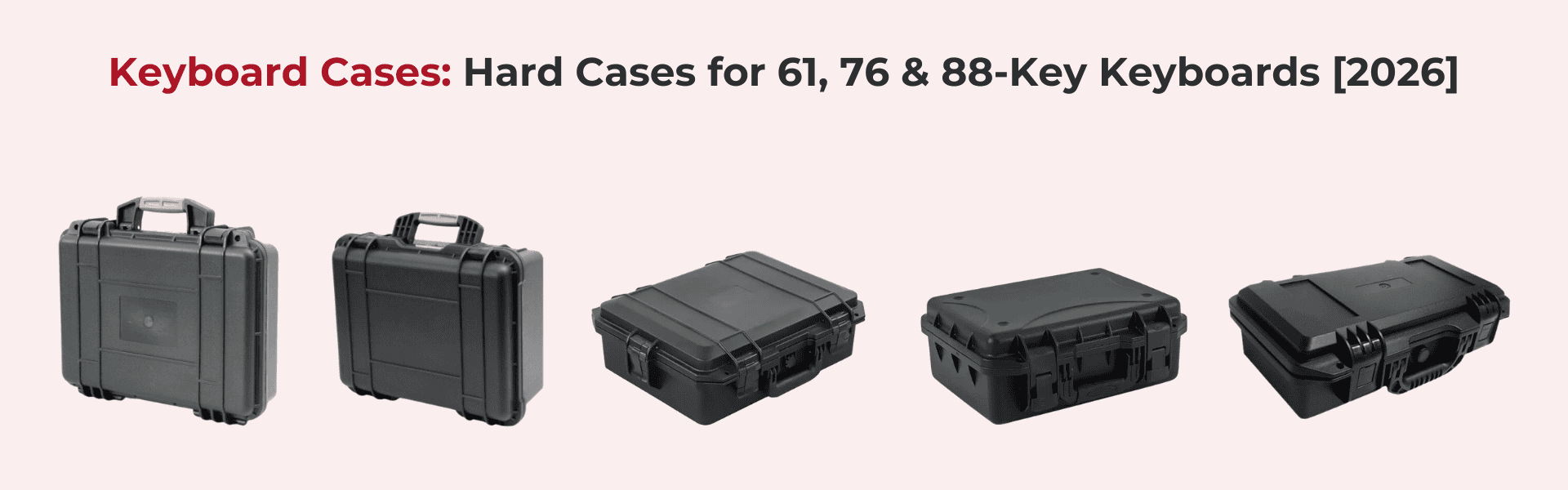
A plastic tool box sounds like a simple purchase until you price what goes inside it. A field technician’s multimeter, clamp meter, and insulation tester can cross fifty thousand rupees. A plumber’s inspection camera costs more than the rest of the kit combined. The box protecting all of it is usually the cheapest thing in the van, and it shows: rusted hinges, cracked lids, tools rattling loose against each other on every speed bump.
This guide covers how professionals should actually choose a plastic tool box in 2026: what separates a crushproof foam-fitted case from a hardware-store organizer, which box suits which trade, and when waterproofing is worth paying for. Every case here is listed with real internal dimensions so you can match your kit before buying.
Why Plastic Tool Boxes Beat Metal (For Almost Everyone)
Steel tool boxes had their era. For working professionals who carry sensitive instruments, engineering-grade polypropylene has quietly taken over, and for concrete reasons:
| Metal tool box | Polypropylene tool case | |
|---|---|---|
| Rust and corrosion | Rusts at scratches, worse in coastal and monsoon climates | Immune |
| Weight | Heavy before you add a single tool | Roughly half the weight |
| Impact behaviour | Dents transfer shock straight to contents | Shell flexes, crushproof structure absorbs the hit |
| Interior | Bare metal tray, tools rub and chip | Customizable foam grips each tool separately |
| Electrical safety | Conductive | Non-conductive shell |
| Weather sealing | Rarely sealed | Available fully waterproof with rubber seal |
The one thing metal still wins on is resisting a direct cut or fire. For every other failure mode a working tool kit actually faces, a quality plastic tool box protects better while weighing less.
The Empty Tool Box Concept: Why Foam Changes Everything
Most tool boxes are sold around compartments and trays designed by someone who has never met your kit. Our cases take the opposite approach: every case is sold in two variants, Empty Case or Case With Foam (plain PU foam), and the interior is yours to define.
The foam variant gives you PU layers that cushion tools above and below, and every Case With Foam order includes a foam-cutting knife: lay your tools out, trace them, and cut each one a snug pocket yourself the same evening. The step beyond DIY is custom-cut foam: send us your tool list or a photo of the laid-out kit, and we CNC-cut a cavity for every instrument. Nothing touches, nothing rattles, and a missing tool is visible at a glance before you leave a site. That last part matters more than it sounds. Technicians lose more tools to “left it on site” than to breakage, and shadow-foam layouts are how aviation and medical service teams enforce tool control.
For a full explanation of foam options, see our guide to custom foam inserts.
Choosing a Tool Case by Trade
Electricians and Electronics Technicians
The Electrician Tool Case E4310N (430×250×95 mm internal) is shaped for meter-heavy kits: multimeter, clamp meter, tester, strippers, and driver set, each in its own cavity in a slim body that slides behind a van seat. The shell is dustproof and crushproof with a non-conductive polypropylene body.
For service engineers carrying test and calibration instruments, the larger Professional Equipment Hard Case E4713S-U (468×297×134 mm) takes bench meters, probes, and cabling in one presentable case that looks right walking into a client’s plant.
Plumbers and Mechanical Trades
Plumbing kits are wet kits. The Plumbers Tool Box EW4014 (398×298×140 mm) is an EW series case, which means genuinely waterproof with a rubber-sealed lid, so a box that sits in standing water during a bathroom job stays dry inside. Wrenches, PTFE, cutters, and an inspection camera all get foam cavities instead of a rusting metal tray.
Power Tool Owners
The Power Tool Case E4314D (430×330×140 mm) replaces the flimsy blow-moulded case your drill came in. A driver, batteries, charger, and bit set sit in fitted foam cavities, and the crushproof shell stacks safely under other site boxes. Dustproof sealing keeps fine site dust out of chucks and battery contacts.
General Kits and Site Engineers
The Tool Case E4211S (420×245×108 mm) is the all-rounder: hand tools, a meter, spares, at home in any trade. For compact daily-carry kits, the Small Tool Box ET2410 (240×168×103 mm) is a water-resistant pocket-sized case for a precision driver set or calibration kit.
Laser level owners get a purpose match in the Laser Level Case EW3510 (350×170×103 mm): waterproof, and sized so the level, targets, and bracket travel in foam instead of a cardboard box on the dashboard.
The Tool Organizer Series: One Footprint, Four Depths
If you standardize kits across a team, the E-series organizer cases share one 310×203 mm footprint in four depths, so they stack cleanly in a van rack:
| Case | Internal (mm) | Best for |
|---|---|---|
| E3106P | 310×203×62 | Precision drivers, flat instruments |
| E3113P | 310×203×117 | Hand tool sets, meters |
| E3117P | 310×203×172 | Bulky tools, stacked layers |
| E3207P | 324×219×74 | Calibration kits, sample sets |
All four are dustproof and crushproof, in Empty Case and Case With Foam variants. Teams running standardized kits can order identical custom foam layouts so any technician can audit any box in seconds.
Protection Levels: An Honest Guide
We make three tiers, and the honest advice is that most tool kits do not need the top one:
| Series | Protection | Choose it when |
|---|---|---|
| E series | Dustproof, crushproof | Kit lives indoors and in vehicles |
| ET series | Water resistant, dustproof, crushproof | Occasional rain exposure between van and site |
| EW series | Waterproof, dustproof, crushproof, pressure valve | Monsoon field work, marine, outdoor sites |
A waterproof tool box earns its premium the first time a site floods or a case rides in an open pickup through July rain. If that is never your reality, the E series delivers identical impact protection for less.
Heavy Duty and Waterproof Picks
When the kit gets bigger or the conditions get worse, step up to the EW series:
- Heavy Duty Tool Box EW3916 (388×268×156 mm): waterproof, deep enough for power tools plus hand tools in two foam layers.
- Waterproof Utility Hard Case EW4820 (480×370×200 mm): the big field box for test equipment, survey gear, or a complete service kit for one machine.
- Tool Box Bag EW4010 (396×267×101 mm): slim waterproof case for the grab-and-go layer of your kit.
All EW cases carry a pressure equalization valve, so a case sealed in an air-conditioned office still opens easily on a hot rooftop.
Sizing Your Tool Storage Box: The 25 mm Rule
Whatever you carry, sizing works the same way. Lay your tools out in their intended arrangement, measure the footprint, and choose a tool storage box whose internal dimensions are at least 25 mm larger on every side. That margin is the foam that does the actual protecting. Height matters too: leave 20 to 30 mm above your tallest item for lid foam.
Buying for gear other than tools? The same cases and rule apply across our range, covered in our guides to drone cases and keyboard cases, and in our general hard carry case guide.
More Trades, Same Logic
The trade sections above cover the common kits, but the same case-plus-foam logic serves any field professional whose tools are worth more than the box:
HVAC and refrigeration technicians carry manifold gauges, a vacuum gauge, thermometers, and leak detectors: pressure instruments that drift when knocked. A foam-fitted E4713S-U keeps each gauge seated and visible.
Solar installers and electrical auditors travel with irradiance meters, IV curve tracers, and thermal cameras, often in an open vehicle between sites. This is EW territory: a sealed EW4820 shrugs off both rain and panel-site dust.
CCTV, network, and fibre teams may have the strongest case of all. A fibre splicing machine costs more than every other tool combined and dies from exactly the kind of vibration a bare van floor delivers. A dedicated foam cavity in a crushproof case is standard practice for splicer kits worldwide.
Medical device service engineers walk into hospitals where presentation is part of the job. A clean hard case with shadow foam reads as professionalism before a word is spoken, and hospital infection-control teams prefer wipeable polypropylene over fabric bags.
If your trade is not listed, the sizing method below still applies. Lay the kit out, measure, add foam margin.
PU Foam or XLPE Foam?
The Case With Foam variant comes with plain PU foam: light, gentle on tool finishes, and the right answer for most kits, especially once custom cavities are cut into it. Choose CNC-cut XLPE foam instead when your tools are heavy or sharp-edged. XLPE is a denser closed-cell foam that holds cavity walls under repeated load, wipes clean of oil and grease, and does not absorb water, which suits wet trades and washdown environments. Many teams combine them: XLPE base layer for heavy tools, PU lid foam pressing everything down. All foam is converted in-house by ToolFit India, our specialist foam conversion unit, which is why we can cut any layout in any foam grade rather than reselling whatever a supplier stocks. Full comparison in our guide to choosing between custom foam and DIY inserts.
Keeping a Tool Case Working for a Decade
Polypropylene cases need almost no care, but three habits extend their life:
- Rinse and wipe the seal area occasionally. Grit on the rubber seal is what wears it, not age.
- Do not carry a case by its lid with latches open. The hinge takes the load it was not built for.
- Vacuum the foam every few months. Dust settling into cavities migrates onto tools, especially optics and connectors.
Latches, seals, and foam on our cases are replaceable parts, so a damaged component is a spare-part order, not a new case.
What Professionals Ask Before Buying
Beyond size and sealing, three practical checks separate a professional case from a household organizer:
- Latches: should clamp with a cam action and survive a thousand cycles. Ours are reinforced and replaceable.
- Hinge line: a full-length moulded hinge outlives riveted metal hinges, which are the first failure on cheap boxes.
- Stacking: moulded ribs should locate one case on another so a van stack does not slide.
Every case in this guide is engineering-grade polypropylene, sold in Empty Case and Case With Foam variants, and serviceable: latches, seals, and foam are all replaceable parts, because a tool case should outlast several generations of the tools inside it.
FAQ: Plastic Tool Boxes
What is the best plastic tool box for electricians in India? The E4310N electrician tool case. Its slim 430×250×95 mm foam interior is shaped for meters and testers, the shell is non-conductive, dustproof, and crushproof, and it fits behind a van seat.
Are these tool boxes sold empty? Your choice. Every case comes in two variants: Empty Case, or Case With Foam, which adds plain PU foam layers and includes a foam-cutting knife for shaping your own tool pockets. For a permanent shadow layout with a cavity per tool, order CNC-cut custom foam (typically 7 to 15 working days).
Is a plastic tool box strong enough for site work? Engineering-grade polypropylene cases are crushproof: they are built to be stood on, stacked under load, and dropped without transferring the impact to the contents. That is a different class of product from a hardware-store organizer.
Which tool box is fully waterproof? EW series cases: the EW3916 heavy duty tool box, EW4014 plumbers box, EW4010, EW3510, and EW4820. Each has a rubber-sealed lid and pressure equalization valve. E series cases are dustproof and crushproof but not waterproof, and ET series cases are water resistant.
Can foam really hold heavy tools in place? Yes. Custom-cut foam cavities grip each tool on all sides, so a box carried vertically or upside down keeps every tool seated. Heavier items simply get deeper cavities.
What size tool box should I buy? Arrange your tools flat, measure the footprint, and add 25 mm per side plus 20 to 30 mm of height clearance. When in doubt, size up one step: kits only grow.
Do you make tool cases for teams with identical kits? Yes. The E-series organizer range shares stackable footprints, and we cut repeatable custom foam layouts so every technician’s case matches. This is the same tool-control approach used in aviation maintenance.
Plastic or metal tool box: which lasts longer? In Indian conditions, polypropylene. No rust, no dents, no hinge corrosion through monsoon humidity, and the shell keeps its shape after impacts that permanently deform sheet metal.
Build Your Tool Kit Around the Right Case
Start from your trade, match your kit’s measurements against the internal dimensions above, and pick your protection tier honestly. Every case ships free across India in your choice of Empty Case or Case With Foam variants, with custom-cut foam available on request. Browse the full range at store.caseandfoam.in or send us a photo of your laid-out kit on WhatsApp and we will recommend the exact case and foam layout for it.
More from this series: drone cases guide · keyboard cases guide · custom foam inserts